Showing posts with label IIPM-New-Delhi. Show all posts

Sunday, January 09, 2011

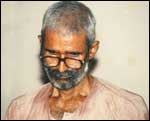
Bramheshwar Singh Mukhia

IIPM BBA MBA Institute: Student Notice Board

When he was not arrested, Mukhia never fought election in his life. Leave alone Bramheshwar Singh MukhiaMP or MLA, Mukhia never ever contested even in the local elections. But when he was arrested and taken to jail, he decided to give it a shot. He fought the election and lost. He never managed to bag the alias like MLA Saheb, MP Saheb or Netaji. But he was lovingly called 'Mukhia' by his supporters. Mukhia can variously mean local head and several things. He got this alias because he used to lead the dreaded Ranvir Sena, a notorious caste militia that was indulged in a bloody battle with Leftist ultras in Bihar. He was a cold-hearted mastermind who designed and executed some of the most gruesome massacres that the nation has witnessed. Lakshmanpur Bathe was particularly horrible where the total number of casualties touched the three-figure mark. However, Mukhia always alluded the police because of his simple way of living and penchant for camouflage. His house, a sort of pilgrimage for upper caste Bhumihars whose cause he claimed to have championed, is desolate these days. The same people who drew pride in calling themselves his relatives, now try to distance themselves from his name. His Ranvir Sena was seen by the upper castes as their reply to Leftist ultras and hence they opened their purse strings and heart strings for the 'cause'. His house in Khopira, his office at Katira in Ara and his undisclosed office in Patna used to bustle with people. Mukhia had managed to cultivate a sort of cult status for himself. All sorts of people used to claim the during his camouflaged visit, Mukhia talked to them or/and gave signals. Anyone who was in direct contact with him was almost worshiped. But these stories appear legend today. No one comes to meet him and his family these days. He has been abandoned. His son Indu Bhushan is bitter about this. He mumbles a few expletives and curses his fate.

For More IIPM Info, Visit below mentioned IIPM articles.
IIPM Lucknow – News article in Economic Times and Times of India
Rajita Chaudhuri follow some off-beat trends like organizing make up sessions

Friday, December 31, 2010

Christmas Celebrations At IIPM Pune.....


IIPM BBA MBA Institute: Student Notice Board

IIPM (The Institute of PostGraduate (MBA) & UnderGraduate (BBA) Courses / Degree) was founded by renowned economic visionary Dr. M.K Chaudhuri in the year 1973. It is every student's dream to get admission in IIPM. IIPM has 18 branches through out India. Delhi campus is the International campus of the institute. IIPM is ranked No.1 in Placement Record,Quality of Faculty and Global Exposure. It is ranked No.2 in Student Development, Potential to Network and Infrastructure. It is ranked No.7 in Course Contents amongst all B-Schools in India.

Considering the ongoing festive mood, this day was dedicated to the spirit of Christmas and well-being. The students and staff members were dressed in the colors of ‘Red & White’, the whole campus was decorated with balloons and streamers (code scheme Red-White-Green), a Christmas tree was decorated and placed at the main entrance. On the student display boards, a new-year-resolution poster was put up where nominees went ahead and posted their new-year plans and thoughts. A fish-bowl was placed at the main entrance where all posted good thoughts and compliments to each other. These messages were later distributed by Santa Claus himself! YES, one of our students dressed up as Santa Claus and visited classes during breaks, distributing messages and candies to the students. We must say that he played the role very convincingly with the complete ‘HO-HO, HA-HA’ rhythm. The good-will messages were shared between faculties and students as well. This event was coordinated by the mentor-ship team and the students participated in it whole-heatedly, right from purchasing resources, planning activities, decoration and chart-making, etc. During the day, soft carols were played in the canteen. Overall, the mood was very chirpy and festive.

For More IIPM Info, Visit below mentioned IIPM articles.
IIPM Lucknow – News article in Economic Times and Times of India
Rajita Chaudhuri follow some off-beat trends like organizing make up sessions
IIPM Prof Arindam Chaudhuri on Our Parliament and Parliamentarians' Work
Prof Rajita Chaudhuri: The New Age Woman

Monday, December 20, 2010

Opinion poll: Cong should thank BJP

Prof Rajita Chaudhuri follow some off-beat trends like organizing make up sessions

India is far from shining under the UPA rule but the Opposition has proved worthless
Yashwant Deshmukh
Psephologist and promoter, CVOTER
You don't really need to go through the 'report card' presented by Dr Manmohan Singh to the 'people' of the country to judge UPA II's performance in its first year to know the state of the nation. While the Prime Minister may have lauded the performance of his government at least on the economic front and expressed 'cautious optimism' about the future, you have to be living on another planet to believe that all is hunky dory. In the past year, price rise and the threat of terror attacks have wreaked havoc on ordinary Indians. And these are just two of the major concerns which find resonance in urban and rural pockets alike. Even in the fields of health and education, not to mention infrastructure where the government lists its most notable achievements, there has been little progress on the ground.

While the report deals with several of the UPA's pet schemes, including NREGA, and lists the government's achievements and plans in human development, social inclusion, rural renewal, urban transformation, economic growth, environment, science and technology and disaster management etc., what is the state of the nation? And are Indians truly pleased with the government's performance? These are two questions that need closer scrutiny.

A survey done by CVOTER across 180 Lok Sabha segments in April-May sought answers from 8,721 respondents selected randomly. When asked to rate the government's performance on a scale of 0-10, the mean score that the Centre bagged was an honourable 6.58. UPA chairperson Sonia Gandhi got rated only slightly lower at a mean score of 6.56 and Prime Minister Manmohan Singh bagged 6.39. These better-than-average scores may signal people's acknowledgement of the UPA government's performance.

However, if you compare these scores with those received by the Opposition, the picture becomes clearer. While Leader of Opposition Sushma Swaraj bags an average mean score of 5.13, NDA leader L.K. Advani comes across as the significant loser in the satisfaction index; he scores a below-average 4.73. Clearly, there is acute public dissatisfaction with the performance of the Opposition whose role is of paramount importance in any democracy. And even as the PM may be busy patting himself and his team on the back, it may be argued that the people's support for his government comes not so much from its performance but from a non-functioning Opposition. In short, there's no viable alternative in sight.

The nation's perception of its state and where it is headed couldn't be clearer. When asked what they thought of their living standards in the last one year, 53 per cent from the lower income group responded that it had either remained unchanged or deteriorated.

As many as 49 per cent in the middle income group reported the same while 41 per cent in the higher income group agreed with that'as compared to 56 per cent who thought that it had improved in the same segment. These findings clearly suggest that despite the UPA's poll plank of social inclusiveness and rural development, the poorest in the country have borne the brunt of rising prices and unemployment and underdevelopment. The rich, on the other hand, seem to have benefitted from the government's economic policies.

If Bharat was not shinning in the NDA regime, neither does it seem to be under the present government.

Rising prices, unemployment and terror attacks are the most important issues facing the nation today, reiterated by the findings of our survey, with 16, 18 and 14 per cent of people respectively zeroing in on these when asked to name the most significant problem in India today. These are emotive issues and significantly, 30 per cent of the people surveyed blamed the Central government squarely for the price rise.

But despite being blamed for the situation, why did Indian voters bring the Congress back to power? The numbers are once again illuminating. Apart from those who felt that elections are not won on issues but through money and muscle power (9 per cent), 24 per cent attributed the Congress' success to the Opposition, saying that it was caught up in internal wranglings and did not take up this issue adequately as also to the fact that they did not 'trust' the Opposition. Another 12 per cent said that the Congress' success was in hiding its failures, pointing to the public's disenchantment.

The opposition's inadequacy was brought home when more than one third (37 per cent) people said that the major opposition party, the BJP, had failed to perform its duty of bringing the voice of the people to Parliament.

It's obviously time for the Opposition to wake up from its fitful slumber and smell the coffee.

For More IIPM Info, Visit below mentioned IIPM articles.
IIPM Prof Rajita Chaudhuri's Snaps
IIPM BBA MBA Institute: Student Notice Board
Run after passion and not money, says Arindam Chaudhuri
Award Conferred To Irom Chanu Sharmila By IIPM
IIPM Prof Arindam Chaudhuri on Our Parliament and Parliamentarians' Work

Saturday, December 11, 2010

ASSAM ACCIDENTS: Killer roads take a toll


Prof Rajita Chaudhuri follow some off-beat trends like organizing make up sessions

Experts attribute road accidents to overspeeding

Some twenty-five passengers were injured when a bus collided with a truck on the NH 31 at Pathsala in Barpeta district on the night of May 16.

Nearly fifteen schoolchildren were injured when a school bus (AS 15-1616) fell into a ditch on May 22 at Burah in Darrang district.

Local dailies in Assam unfailingly reports about such road accidents. According to government statistics, during the past one decade road accident cases have doubled in the state. In 2000, some 2,429 road accident cases were reported. But the figure increased to 4,869 in 2009. Accidental deaths in 2009 were 1,991 as against 1,032 in 2000. In comparison to all India level, Assam shares 44 per cent of accidental deaths.

In Guwahati city, some 626 motor accident cases took place in 2007; 626 in 2007; 641 in 2008 and 508 in 2008. Among districts Sonitpur registered a maximum 363 accidental cases in 2009. Lower Assam's Dhubri district and Barak valley's Cachar district stood second and third with 346 and 306 accidental cases. Out of 4,686 accidents taking place in the state in 2008, as many as 2,683 accidents took place on national highways; 849 were on state highways and the remaining 1,151 on other roads of the state.

City Superintendent of Police (Traffic) Bibekananda Das told TSI that the traffic branch of city police is compiling last five years' data of road accidents to study them. Only after completion of the process, decision could be taken to prevent accidents, the newly appointed SP (traffic) said. Traffic experts attribute road accidents to overspeeding and even increasing cars on the roads. 'Untrained drivers, fake licence holders and absence of civic sense among people are also responsible for increasing number of accidents,' Violet Baruah, SP (CID) told TSI. The problem is further compounded when some drivers don't obey traffic rules, she said.

According to the rule, mobile phones should not be used during driving and seat belts should be fastened, but only a few people obey them. Drunk driving is also responsible for several road accidents in the state.


An Initiative of IIPM, Malay Chaudhuri and Arindam chaudhuri (Renowned Management Guru and Economist).

For More IIPM Info, Visit below mentioned IIPM articles.
IIPM BBA MBA Institute: Student Notice Board
Run after passion and not money, says Arindam Chaudhuri
IIPM BBA MBA B-School: Rabindranath Tagore Peace Prize To Irom Chanu Sharmila
Arindam Chaudhuri – Everything is not in our hands
Planman Consulting: The sister concern of IIPM

Planman Consulting
Prof Rajita Chaudhuri on 'THEY ARE COMING TO GET YOU – NOT ALIENS SILLY'
IIPM Prof Rajita Chaudhuri's Snaps

Monday, November 01, 2010

Event at IIPM Chandigarh and Chennai


IIPM Chandigarh held a Seminar on outlook for global economy
A seminar on ‘Outlook for the global economy over the next year’ was orgainsed by IIPM Chandigarh at its campus on Sunday. The guest of honour for the seminar was Prof Clare Moonan, senior lecturer, International Business, Sheffield Business School, Sheffield Hallam University (UK).

The focus was on understanding the political and economic environment with a view to work with international arena. This discussion was taken a step higher by understanding the working of global economy over the next few years with some points like including recovery is proceeding at varying speeds, financial conditions have improved further but remain challenging, commodity prices are rebounding, inflation pressures will remain subdued in most economies, continued policy efforts are needed to sustain the recovery and prepare for exit.

One day blood donation camp at IIPM Chennai
It was extremely heart warming to see 55 people comprising of staff and students at IIPM Chennai come and put their best foot forward by donating blood for a worthy cause. IIPM Chennai’s Great Indian Dream Club in association with Lions Blood Bank and Research Foundation Egmore conducted a one day blood donation camp at IIPM. The events team at IIPM gave people the opportunity to give back to society, the same society where they live and thrive everyday. Sonal Chatterji from IIPM commented “Donating blood is such a striking experience that no words can define. You have to donate blood yourself to feel it. Anyone might require blood anytime including ourselves and our dear ones”. A student K.S Ahmed Faraz said “ It was a great feeling donating the blood for a good cause”.

Officials from the association shared that donating blood reduces the chances of Ischemic heart diseases as frequent donations reduce the accumulated and unwanted iron load from the body. Blood acts as a life saving medicine which works wonders in certain medical treatments. It was above all a touching experience and great satisfaction in saving lives with unselfish efforts.

From a humble beginning that Lions Blood Bank, Egmore made in 1984 and with the untiring and zealous approach of many philanthropists, today, it has made a remarkable progress and has carved a niche among the hospitals and the medical practitioners for supply of quality products. This project has invested about Rs 10,000,000 for its expansion program for production of blood components during the period 1998-1999. At Lions Blood Bank, each unit of blood passes through a rigorous screening process for Malaria, Hepatitis B, Hepatitis C, Syphilis and HIV. One percent of all produced components are subjected to rigorous analysis by in-house and independent laboratories, in order to maintain the highest quality of blood products and ensure that the risk of infections being transmitted by transfusion is minimal.

For More IIPM Info, Visit below mentioned IIPM articles.
Run after passion and not money, says Arindam Chaudhuri
IIPM BBA MBA B-School: Rabindranath Tagore Peace Prize To Irom Chanu Sharmila
Prof. Rajita Chaudhuri's Website
Planman Consulting
Social Networking Sites have become advertising shops
IIPM makes business education truly global

Thursday, October 21, 2010

The lost treasures campaign

IIPM B-School Detail

ASI makes efforts to bring back artifacts held abroad

The Archaeological Survey of India has joined international network of various countries to give a fillip to effort to bring back precious Indian artifacts held abroad.

Many other countries such as Guatemala, Mexico, Peru, Chilie, Cyprus and Bolivia are working together with India to reclaim their lost treasures. Also, they are getting support from the UNESCO. Each of these countries are trying to prepare a database of such artifacts. It's understood that once it is ready they will make a concerted effort through diplomatic and legal channels to reclaim their antiquities.

Of late, India has launched a campaign for the return of iconic Kohinoor and Sultanganj Buddha statue that were taken away during the British rule. But, chances of bringing these rare artifacts back are really dim as British Museum Act-1963 doesn't allow items acquired through authentic process to be removed, according to experts. In order to get these artifacts, India and other countries will have to mount pressure on the UK to change its antiquities law.

Even ASI officials are apprehensive about the move. They believe that their efforts may not yield positive results in particular cases. A senior ASI official told TSI on the condition of anonymity: "We have successfully brought back many lost and stolen artifacts in the past. But Kohinoor is a different case altogether. There are many complex issues involved in the process. We are studying the antiquity law of the UK and trying to collect the necessary facts." ASI chairman Gautam Sengupta has stressed on the need to be realistic on the chance of getting back these most-talked about treasures.

Earlier, the ASI had succeeded in bringing back many stolen artifacts such as Atru Tehsil of Rajasthan and a Buddha statue of Bodhgaya, Bihar. Indian-origin people lobbied in the UK for the return of these stolen items. Besides, the ASI also raised the issue with UK Ambassador and ultimately the artifacts were returned. Can the ASI repeat its success story again? It seems difficult with Kohinoor, say experts. They said the Britishers took it after the treaty of Lahore was signed following two wars with Sikhs. However, the ASI is trying to push the matter on case-to-case basis as the list of artifacts held abroad is too long to handle.


Vikas Kumar

For more articles, Click on IIPM Article.

Source : IIPM Editorial, 2010.

An Initiative of IIPM, Malay Chaudhuri and Arindam chaudhuri (Renowned Management Guru and Economist).

For More IIPM Info, Visit below mentioned IIPM articles.
Prof. Rajita Chaudhuri's Website
IIPM’s Management Consulting Arm - Planman Consulting
IIPM Lucknow – News article in Economic Times and Times of India
Arindam Chaudhuri – Everything is not in our hands
Planman Consulting

IIPM makes business education truly global
domain-b.com : IIPM ranked ahead of IIMs
Social Networking Sites have become advertising shops
IIPM ranked No 1 B-School in India
IIPM: Management Education India

Tuesday, September 21, 2010

eBay’s latest TVC may refresh the good ol’ memories of Doordarshan instantly

but will it actually make an impact in the consumers’ minds to eventually hop on to internet’s buying and selling world is still an unanswered question.

Location: Humboldt County, 420 km north of San Francisco, California. Three cows, eight houses, and a post office. Add to it a population of less than 25. Founded in 1865 in the aftermath of the California Gold Rush, it boasts of three owners in the last 130 years. Still Clueless? Bridgeville, the tiniest of towns in North Western California may provide a little help, which seemed long past its glory days when in 2002, it shot at immortality as it became the first town ever to be listed on eBay. The world’s greatest auction and shopping website has again made heads turn with its ‘Super Deals, Super Safe’ campaign in India. But is this really a new beginning of ‘The eBay way’ in the country?

Narottam Puri and Komal GB Singh, the oldest anchors on the Indian television, reignited the nostalgia of Doordarshan’s talk show programs via the latest TVC of this online shopping giant. The names are well-known to almost every single Indian individual belonging to the 20+ age group as they ruled Doordarshan’s charts when simplicity and to the point talk ruled the roost and glamour and frivolity were almost non-existent. The TV commercial showcase a similar talk show called ‘The eBay way’ where callers ask questions related to various choices in their lives and the hosts direct them to the eBay website with the message of getting the best and the most secure deals. This move by eBay at one level, creates a unique identity in the minds of the target group so as to enhance the brand awareness and brand recall but fundamentally, this campaign is trying to achieve something far bigger (read: tougher). According to market reports, close to 50 million Indians go to the internet at least once a week. Out of these, at least 35 million visit the internet daily. And around 90% of those surf the net for some or the other sort of products, be it goods or services. But, as it

goes with the Indian psyche, word of mouth publicity still towers above all and most netizens still want to follow opinion leaders in their reliability sphere. Hence, still maximum purchases happen to be offline. And that’s the wall eBay is trying to crack with this campaign.

For more articles, Click on IIPM Article.

Source : IIPM Editorial, 2010.

An Initiative of IIPM, Malay Chaudhuri and Arindam chaudhuri (Renowned Management Guru and Economist).

For More IIPM Info, Visit below mentioned IIPM articles.
Award Conferred To Irom Chanu Sharmila By IIPM
IIPM’s Management Consulting Arm - Planman Consulting
IIPM Lucknow – News article in Economic Times and Times of India
IIPM: Planman Stars – Event management made easy

Arindam Chaudhuri's Portfolio - he is at his candid best by Society Magazine
IIPM makes record 10,000 placements in five years
IIPM Related Links
Social Networking Sites have become advertising shops